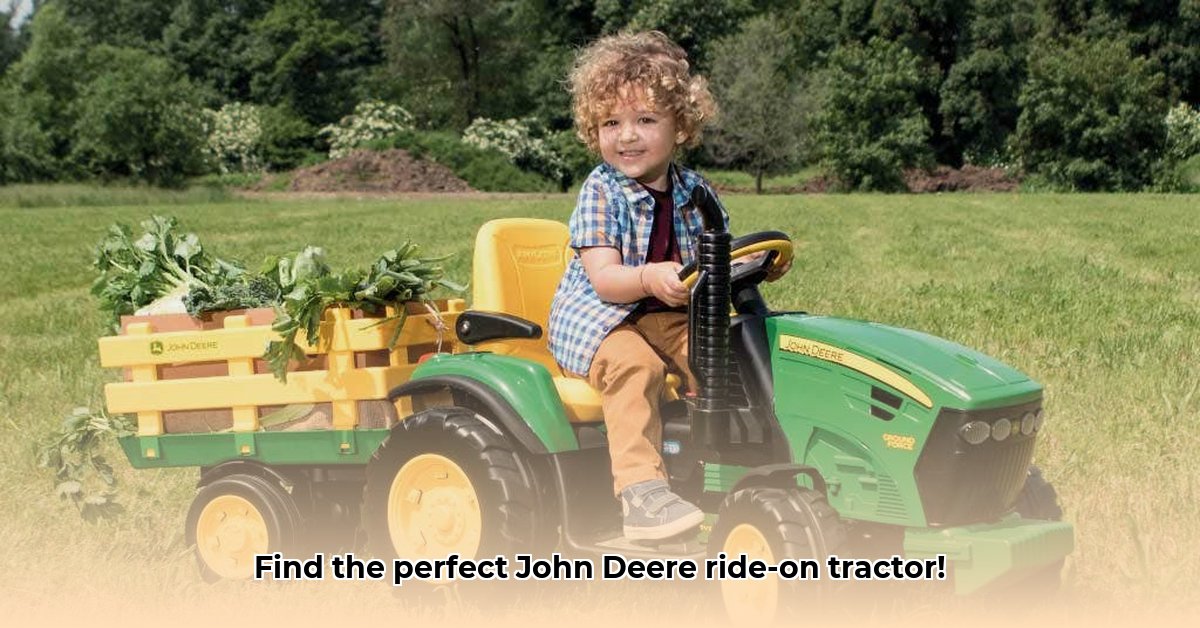
The market for children's ride-on tractors is booming, fueled by a growing desire for outdoor play and imaginative experiences. John Deere, a brand synonymous with quality and durability, naturally holds a prominent position. But with a wide array of models and competitors, choosing the right tractor for your little one can feel overwhelming. This comprehensive guide will help you navigate the options, focusing on safety, durability, and value. We'll delve into John Deere's offerings and compare them to leading competitors, ensuring you make an informed decision. For more details on John Deere ride-on tractors, check out this helpful resource.
A Closer Look at a John Deere Ride-On Tractor: The "Gator Jr." (Illustrative Model)
To illustrate the features and considerations, we'll analyze a hypothetical John Deere model: the Gator Jr. While specific specifications will vary by model, this example highlights key aspects. The Gator Jr. is designed for children aged 3-6.
Features & Functionality
The Gator Jr. is envisioned as a compact, rugged tractor ideal for backyard adventures. Its weight capacity is approximately 100 pounds, suitable for most preschoolers and early elementary-aged children. The battery-powered system offers quiet operation and is environmentally friendly. Key features include realistic engine sounds, bright LED headlights, and a working horn, enhancing the immersive play experience.
Pros & Cons of the Gator Jr. (Illustrative)
Pros:
- Durable Build: John Deere's reputation suggests robust construction built to withstand vigorous play.
- Engaging Features: Sounds, lights, and a horn elevate the play experience beyond simple driving.
- Safe Design: A focus on safety is crucial; features like rounded edges and a low center of gravity are expected.
Cons:
- Limited Run Time: A common drawback of battery-powered models is shorter battery life. The Gator Jr. might have approximately one hour of runtime, requiring a 12-hour recharge. This impacts playtime and requires planning.
- Price Point: While offering good value, John Deere tractors often sit in a mid-range price bracket (around $250-$300), potentially making them less accessible to some shoppers.
Safety Considerations
Safety is paramount. The Gator Jr., adhering to standards like ASTM F963 (American Society for Testing and Materials standard for toy safety), is expected to include features such as a secure seatbelt, a low center of gravity for stability, and smooth, rounded edges to minimize injury risks.
Durability and Longevity
Constructed from sturdy plastic, the Gator Jr. is projected to withstand considerable use. However, its lifespan depends significantly on proper care: regular inspection, safe storage, and avoiding rough play will extend its life.
John Deere vs. The Competition: A Comparative Analysis
Choosing a ride-on tractor requires comparing options. The following table illustrates a comparative analysis, keeping in mind that specifications and prices may vary based on models and retailers:
| Brand | Model | Approximate Price Range ($) | Age Range (Years) | Power Source | Key Features | Safety Features |
|---|---|---|---|---|---|---|
| John Deere | Gator Jr. | 250-300 | 3-6 | Battery | Sounds, lights, horn, realistic design | Seatbelt, low center of gravity, rounded edges |
| Tractor Town | Mighty Farm | 150-250 | 2-5 | Battery | Simple design, easy operation | Seatbelt, sturdy construction |
| Farm Buddies | Country Cruiser | 350-450 | 4-8 | Battery | Enhanced suspension, potentially higher speeds | Comprehensive safety features, positive reviews |
| Green Machines | Power Plow | 400-500 | 5-10 | Battery/Gas | Advanced features, potential for attachments | Superior safety measures, higher price point |
This comparison highlights variations in price, features, and target age groups, allowing for informed decision-making.
Actionable Buying Guide: Steps to Choosing the Right Tractor
Selecting the optimal ride-on tractor involves careful consideration of several factors. Follow these steps:
- Child's Age and Size: Always check weight limits and ensure suitability for your child's developmental stage.
- Budget: Determine a realistic budget and compare models accordingly.
- Essential Features: Decide on "must-have" features—lights, sounds, accessories—and weigh the value versus the cost.
- Power Source: Battery-operated models offer quieter operation, but gas models provide greater power and potential for longer use.
- Safety Certifications: Verify compliance with ASTM F963 or similar safety standards.
- Durability and Maintenance: Consider the ease of maintenance and materials' durability to ensure longevity.
- Read Reviews: Check online reviews for insights from other parents regarding performance and durability.
Prioritize safety and age-appropriateness above all else.
Conclusion: Finding the Perfect Ride-On Tractor for Your Child
The market offers a diverse range of choices. John Deere's reputation for quality is undeniable, but other brands provide compelling alternatives at varying price points. By thoughtfully weighing your child's age, your budget, and the prioritized features, you can select the ideal ride-on tractor to create lasting memories of joyful outdoor play. Remember, responsible adult supervision is always essential during playtime.